Women Parliamentarians Drive Nearly Half of Pakistan’s Legislative Agenda in 2024–25
Women Parliamentarians Drive Nearly Half of Pakistan’s Legislative Agenda in 2024–25
By Fahmida Riaz
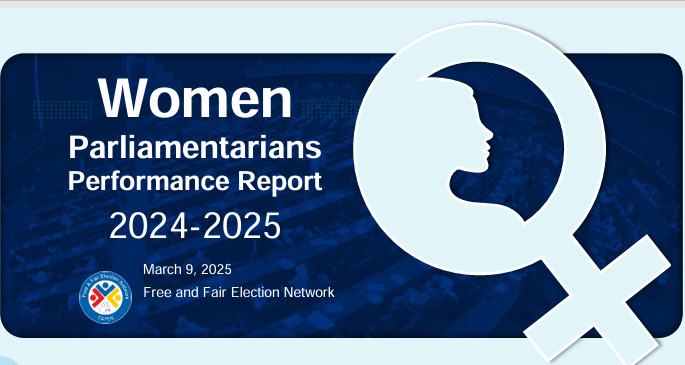
Islamabad, Pakistan – In a historic demonstration of legislative leadership, women parliamentarians in Pakistan contributed nearly half (49 percent) of the parliamentary agenda during 2024–25, despite constituting only 17 percent of the Parliament’s current membership. This unprecedented level of participation marks a significant milestone in the country’s political landscape, showcasing the growing influence of women in shaping policy discourse and legislative priorities, says Free and Fair Election Network report.
Unprecedented Contributions Amid Challenges
Women Members of the National Assembly (MNAs) and Senators collectively sponsored 44 percent of Private Members’ Bills, 49 percent of Private Members’ Resolutions, 44 percent of Calling Attention Notices (CANs), and 68 percent of proposals for Amendments to the Rules of Procedure. Female MNAs alone initiated 55 percent of the agenda in the lower house, while women Senators accounted for 31 percent in the upper house. These figures represent the highest level of contribution by women legislators since 2015–16, reflecting their proactive engagement in addressing critical national issues.
The thematic focus of their agenda items was broad and impactful, encompassing institutional accountability, climate resilience, economic inequality, and infrastructural challenges such as energy pricing and internet accessibility. Women legislators also prioritized human rights protections for marginalized groups, healthcare reforms, labor rights, and governance modernization. Notably, they proposed amendments to criminal laws to reinforce safeguards for women, children, and minorities, alongside procedural reforms aimed at enhancing inclusivity in parliamentary processes.
Declining Transaction Rates: A Broader Parliamentary Issue
Despite their significant contributions, the rate at which women-sponsored agenda items were addressed declined compared to previous years. In 2024–25, the National Assembly addressed 67 percent of women-sponsored agenda items, down from 69 percent in 2022–23 and 81 percent in 2021–22. Similarly, the Senate addressed 77 percent of women’s agenda items, a decline from 85 percent in 2022–23 and 94 percent in 2021–22. However, this trend reflects a broader stagnation in parliamentary efficiency rather than gender-based disparities, as items sponsored by male legislators experienced a comparable decline.
Jointly-sponsored agenda items fared better in terms of transaction rates. In the National Assembly, 83 percent of jointly-sponsored items were addressed, compared to 67 percent of those initiated by women lawmakers and 66 percent by men. The Senate exhibited a similar pattern, addressing 80 percent of jointly-sponsored business and 77 percent of both women- and men-sponsored agenda items. This suggests that collaborative efforts between male and female legislators yield more favorable outcomes, highlighting the importance of bipartisan cooperation in advancing legislative priorities.
Individual Contributions and Active Participation
Women legislators individually contributed more agenda items than their male counterparts, underscoring their proactive engagement in parliamentary proceedings. Each female MNA introduced an average of 17 agenda items—over five times the male average of three per legislator. In the Senate, women proposed 11 items each, nearly double the male average of six. This high level of individual contribution reflects the dedication and diligence of women parliamentarians in addressing public concerns.
Active participation in parliamentary proceedings was another hallmark of women legislators’ performance. Of the 48 female MNAs, 34 (65 percent) both sponsored agenda items and participated in debates, while 13 (25 percent) only sponsored agenda items. Only one female MNA (2 percent) participated solely in debates, and five did not engage in the proceedings during the reporting period. In the Senate, 13 out of 15 female Senators (87 percent) actively contributed to both agenda items and debates, while two (13 percent) only submitted agenda items. These figures demonstrate that women legislators were not only active in proposing agenda items but also in engaging in debates and discussions, further amplifying their impact on policy discourse.
Attendance Patterns: A Testament to Dedication
The attendance patterns of women parliamentarians further highlighted their commitment to legislative work. Female MNAs maintained consistently higher participation rates than their male counterparts, attending 70 sittings (75 percent of 93 sittings) on average compared to 59 sittings (63 percent of 93 sittings) by male MNAs across 13 sessions held during the reporting year. In the Senate, women’s attendance fluctuated slightly, surpassing or matching male colleagues in six of 11 sessions and trailing in five. Despite these variations, female Senators averaged 41 sittings (67 percent of 61 sittings), marginally exceeding the 39 sittings (64 percent of 61 sittings) recorded by their male counterparts.
This high level of attendance underscores the dedication of women legislators to their roles and responsibilities. It also reflects their determination to ensure that their voices are heard and their contributions are recognized in shaping Pakistan’s legislative agenda.
Challenges and Opportunities
Despite their significant contributions, women legislators faced challenges in ensuring their agenda items were addressed. Around one-third of the agenda items sponsored by women in the National Assembly were either not read out during the proceedings or were deferred due to the absence of the mover or the concerned minister. Similarly, nearly 23 percent of women-sponsored agenda items in the Senate remained unaddressed. These challenges highlight the need for procedural reforms to enhance the efficiency and inclusivity of parliamentary processes.
However, the high transaction rates of jointly-sponsored agenda items suggest that collaborative efforts between male and female legislators can yield more favorable outcomes. This underscores the importance of fostering a culture of cooperation and bipartisanship in Parliament to address the nation’s pressing challenges effectively.
A Legacy of Leadership and Impact
The performance of women parliamentarians in 2024–25 is a testament to their leadership, dedication, and impact on Pakistan’s legislative landscape. Despite constituting a minority in Parliament, they contributed nearly half of the parliamentary agenda, championing critical issues such as human rights, healthcare reforms, and climate resilience. Their proactive engagement in debates, high attendance rates, and individual contributions further underscore their pivotal role in shaping Pakistan’s legislative future.