University of Balochistan Closed Indefinitely Amid Security Concerns
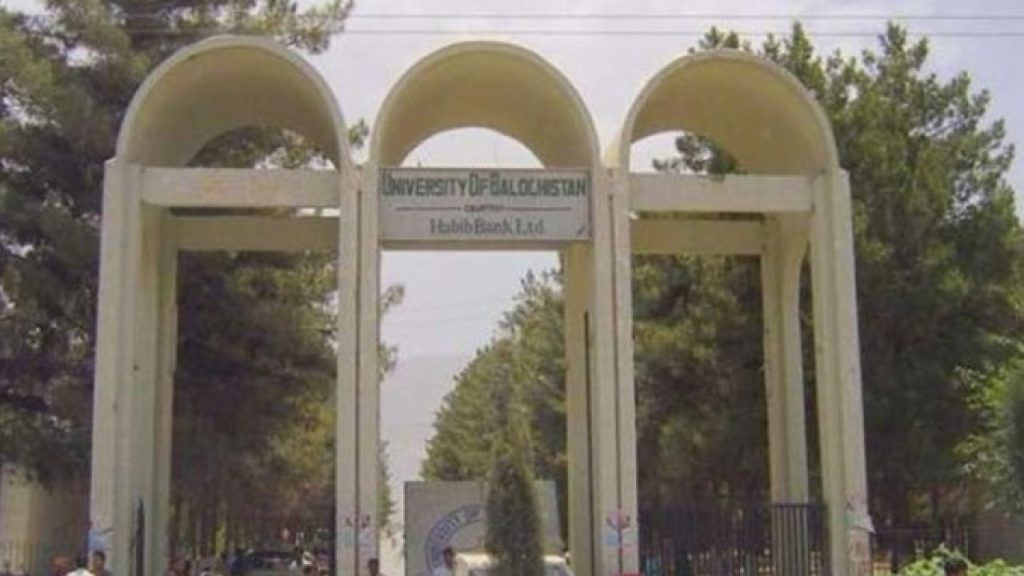
The University of Balochistan has been closed indefinitely due to security concerns, with academic activities shifting online. Staff to continue reporting to offices.
The University of Balochistan has been closed indefinitely, with all academic activities shifting online, according to an official notification issued by the university registrar on Tuesday. The notification, a copy of which is available with media people, does not specify the reason for the closure. However, the security situation in Balochistan has significantly worsened in recent weeks due to an increase in militant attacks targeting security forces.
University Moves to Online Education
The official directive mandates that all campuses of the University of Balochistan transition to online learning. The Directorate of Information Technology has been instructed to transfer all academic data online to ensure the continuity of education.
Furthermore, deans and directors are required to submit weekly performance reports to the Registrar’s Office, while university staff must continue reporting to their offices as usual.
University of Balochistan Vice Chancellor Zahoor Ahmad Bazai dismissed social media reports about the institution’s closure as “baseless” in a statement to Dawn.com. However, he explained that due to the closure of national highways, students from remote areas of the province were unable to reach the campuses. As a result, the administration opted to transition to online classes.
Bazai noted that this approach was initially tested by the Balochistan University of Information Technology, Engineering and Management Sciences and the Sardar Bahadur Khan Women’s University, where the teaching process has been running smoothly.
“Taking this into consideration, the University of Balochistan administration also decided to shift to online classes,” he added.
Escalating Violence in Balochistan
The decision to shut down the university comes amid a surge in militant attacks in Balochistan. Previously engaged in a low-level insurgency, groups like the outlawed Balochistan Liberation Army (BLA) have escalated their operations, employing new tactics to cause higher casualties.
Just days before the university’s closure, a vehicle-borne suicide bomber attacked a security forces convoy in Noskhi district, resulting in the martyrdom of three security personnel and two civilians. The attack was part of a series of violent incidents in the province.
Additionally, a blast targeting Balochistan’s Anti-Terrorist Force (ATF) in Quetta claimed the life of a police officer, injuring six others. These incidents followed the recent Jaffar Express train hijacking near Sibi, in which 26 hostages, including 18 security personnel, were killed. An additional five security personnel were martyred during the rescue operation.
Government’s Response to the Crisis
Following these attacks, the Pakistani military has vowed to take decisive action against terrorist groups operating in Balochistan, including their abettors and facilitators both inside and outside the country.
The indefinite closure of the University of Balochistan underscores the worsening security environment in the province, highlighting concerns over public safety and stability as authorities work to contain the rising threat of militancy.