Umerkot NA Seat By-Election: A High-Stakes Political Battle in Sindh
Special Report
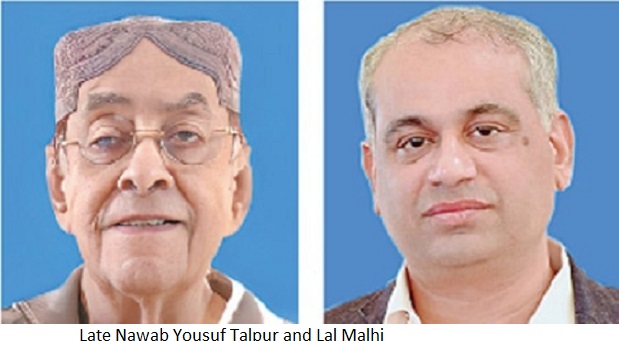
The Umerkot NA seat by-election, necessitated by the passing of veteran PPP leader Nawab Yousuf Talpur, is shaping up to be a fiercely contested political battle. Nawab Talpur, a dominant figure in the region, had an exceptional electoral record, losing only once in the past seven general elections (1993–2024). His widow, Begum Sana Talpur, now carries the PPP banner, while the opposition alliance, Save the Indus River Movement, has nominated Lal Malhi as its joint candidate. This by-election is not just a political contest but a reflection of Sindh’s intricate socio-political fabric, where history, identity, and power dynamics converge.
Umerkot: A District of Contrasts and Challenges
Located in lower Sindh, Umerkot is a district of stark contrasts. While its barrage-fed areas thrive with crops like cotton, wheat, sugarcane, and mangoes, much of the region remains arid, relying on rain-fed agriculture for lentils and bajra. The Sukkur Barrage, a lifeline for farmers, often falls short during the Kharif season, leaving the district grappling with chronic water shortages. This duality of abundance and scarcity shapes the lives and livelihoods of Umerkot’s residents, making water rights a critical issue in the region’s politics.
Historically, Umerkot was part of Tharparkar until it was carved out as an independent district during Syed Muzaffar Hussain Shah’s tenure as Sindh’s chief minister in the 1990s. After a brief re-merger with Tharparkar, it was re-established as a separate district in the early 2000s. This administrative evolution reflects the region’s unique identity and its struggle for recognition within Sindh’s political framework.
A Unique Demographic and Political Landscape
Umerkot is demographically distinct, with its Hindu minority forming a majority of the population. The Hindu community, predominantly comprising lower-caste groups like the Meghwar, Kolhi, and Bheel, plays a decisive role in the district’s electoral politics. Upper-caste Hindus are a minority, but the scheduled castes hold significant sway.
The district is also home to influential political families, including the Syeds, Talpurs, Mangrios, and Rajars, who have maintained their grip on the region’s politics across civilian and military regimes. Their second and third generations continue to dominate the political arena, ensuring the perpetuation of dynastic politics.
Adding to the district’s political complexity is the presence of spiritual jamaats like Ghausia, Hur, and Sarwari, whose disciples actively participate in electoral politics. These spiritual and political networks often intersect, shaping the region’s electoral outcomes.
The Rana Family and Hindu Sodha Rajputs
The Rana family, though rooted in Umerkot, has extended its influence into Tharparkar. The Hindu Sodha Rajputs, who reside in large numbers in Rana Jagir (farmlands), are a notable community in the district. Their current chieftain, Rana Hamir Singh, an MPA, is said to be the 26th Rana of Dhat, underscoring the family’s historical and political significance.
The By-Election Contest: PPP vs. Save the Indus River Movement
The PPP has fielded Begum Sana Talpur, the widow of Nawab Yousuf Talpur, to retain the seat. Meanwhile, the Save the Indus River Movement, an alliance of opposition parties and nationalist groups, has nominated Lal Malhi, a former PTI candidate, as its joint candidate. Lal Malhi, who has a strong local following, has previously served as a Member of the National Assembly on reserved seats.
In the 2024 general elections, Nawab Yousuf Talpur secured a decisive victory with 179,188 votes, far ahead of his rivals Amanullah Talpur (PML-N) and Lal Malhi (PTI), who garnered 44,961 and 38,648 votes, respectively. However, the by-election is expected to be more competitive, with Lal Malhi banking on the support of the Save the Indus River Movement and his deep roots in the community.
Lal Malhi: A Journey from Journalism to Politics
Lal Malhi’s political journey is a testament to his grassroots connections. Belonging to the ancient Malhi community of Umerkot, traditionally involved in fishing and vegetable selling, Lal Malhi rose through the ranks of local politics. After receiving his early education in Hyderabad and studying English at the University of Sindh, he ventured into journalism, reporting for The News and later KTN.
His political career began with his election as Nazim of the Union Council under Musharraf’s local government system. He later joined the PPP through Nawab Yousuf Talpur but shifted allegiances due to the Syed family’s dominance in Umerkot. Lal Malhi’s association with Makhdoom Shah Mahmood Qureshi proved pivotal, helping him secure a National Assembly seat on reserved seats in 2013 and 2018.
As the Central President of PTI’s Minority Wing, Lal Malhi has been vocal about human rights issues, particularly forced conversions. His nomination by the Save the Indus River Movement reflects his growing influence and the opposition’s strategy to consolidate anti-PPP votes.
A Battle of Ideologies and Alliances
Lal Malhi has positioned himself as a staunch critic of the current government, accusing it of curbing media freedom and undermining judicial independence. He has vowed to fight for the rights of the people, drawing parallels between the public’s efforts to protect the Indus River and their determination to safeguard their votes. His campaign resonates with Imran Khan’s ideology, which continues to attract a significant following in the region.
The by-election also marks a significant shift in political alliances. Unlike the 2024 general elections, PTI and the Grand Democratic Alliance (GDA) have joined forces, potentially altering the electoral dynamics in Umerkot. This alliance reflects the opposition’s broader strategy to challenge the PPP’s dominance in Sindh.
Conclusion: A Litmus Test for Sindh’s Political Future
The Umerkot NA seat by-election is more than a contest for a National Assembly seat; it is a litmus test for Sindh’s evolving political landscape. With Begum Sana Talpur carrying the PPP’s legacy and Lal Malhi representing a united opposition, the stage is set for a closely watched and fiercely contested battle. The outcome will not only determine the region’s political future but also offer insights into the shifting dynamics of Sindh’s electoral politics.
As Umerkot goes to the polls, the world will be watching to see how history, identity, and power play out in this fascinating corner of Sindh. The by-election is a reminder of the region’s unique challenges and opportunities, where the past and present intersect to shape the future.