
Trump Imposes 25% Auto Tariffs, Sparking Global Trade Tensions
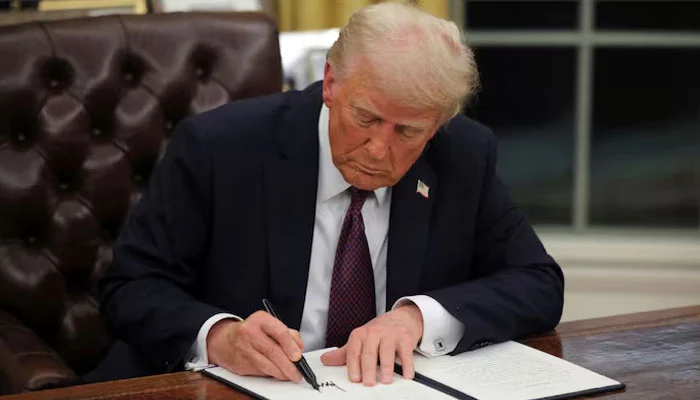
Washington: President Donald Trump has announced a 25% tariff on imported cars and light trucks, a move expected to impact global auto markets, raise vehicle prices, and intensify trade tensions. The new tariffs, set to take effect on April 3, are part of Trump’s broader economic strategy to revive U.S. manufacturing and offset tax cuts through increased tariff revenues.
Global Reactions to the Tariffs
The announcement has drawn criticism from U.S. allies and trade partners. European Commission President Ursula von der Leyen called it “bad for businesses, worse for consumers,” while Canadian Prime Minister Mark Carney described it as a “direct attack” on Canadian workers. The United Auto Workers (UAW) union, however, has welcomed the decision, calling it a step toward revitalizing American autoworker jobs.
Financial markets reacted negatively, with shares of automakers tumbling in after-hours trading and U.S. equity index futures falling, indicating a potential sell-off in the stock market. The S&P 500 Index dropped 1.1% ahead of the announcement, reflecting growing investor concerns.
Economic and Trade Implications
The tariffs are based on a 2019 national security investigation under Section 232 of the Trade Act of 1962, which found that auto imports posed a threat to U.S. national security. However, Trump did not impose tariffs at the time. Now, with his return to the White House, he has moved swiftly to enact these measures.
While the new tariffs apply to all imported cars, temporary exemptions have been made for auto parts compliant with the U.S.-Mexico-Canada Agreement (USMCA). However, experts warn that once tariffs on non-U.S. content within those parts are implemented, costs will rise significantly.
Brad Setser, a former U.S. Treasury official, estimated that nearly 4 million cars from Canada and Mexico will be affected, leading to higher vehicle prices and a slowdown in U.S. car sales. The tariffs also raise concerns about potential violations of the USMCA trade deal and South Korea’s free trade agreement with the U.S.
Impact on U.S. Consumers and Automakers
According to the Center for Automotive Research, the 25% tariff could increase vehicle prices by thousands of dollars, reducing sales and leading to job losses across the U.S. auto sector. Despite Trump’s intention to boost local manufacturing, the industry heavily depends on imported parts, making cost reductions difficult.
Trade groups have also raised alarms. Jennifer Safavian, President and CEO of Autos Drive America, warned that the tariffs will make cars more expensive, limit consumer choices, and reduce manufacturing jobs.
Trump’s Broader Trade Strategy
Since retaking office in January 2025, Trump has aggressively pursued trade restrictions, imposing tariffs on Canada and Mexico over opioid imports, introducing new duties on Chinese goods, and increasing steel and aluminum tariffs. His upcoming April 2 trade announcement is expected to include “global reciprocal tariffs”, although he hinted that some levies may be “more lenient” than previously suggested.
With the U.S. automotive sector already facing economic headwinds, the latest tariffs threaten to disrupt supply chains and further complicate international trade relations, setting the stage for a prolonged period of market uncertainty.