Talks Between Pakistan, Afghan Taliban Deadlocked in Istanbul
ISTANBUL / ISLAMABAD – November 7: The latest round of talks between Pakistan and Afghanistan ended without progress on Friday, as negotiators failed to agree on a mechanism to monitor and prevent cross-border terrorism, officials and sources confirmed.
“The talks in Istanbul are deadlocked,” a senior Pakistani security source told reporters, confirming that discussions had reached an impasse.
The third round of Pakistan–Afghanistan talks, launched on Thursday in Istanbul under the joint mediation of Turkiye and Qatar, was meant to finalise the modalities of a proposed verification and monitoring mechanism to prevent cross-border militant activity.
Pakistan’s delegation, led by Inter-Services Intelligence (ISI) Director General Lieutenant General Asim Malik, included senior military, intelligence, and Foreign Office officials. The Afghan Taliban delegation was headed by General Directorate of Intelligence (GDI) chief Abdul Haq Waseq, and included Suhail Shaheen, Anas Haqqani, and Deputy Interior Minister Rehmatullah Najib.
Talks Collapse Amid Deep Differences
Sources said the Pakistani delegation left for the airport after negotiations broke down Friday afternoon. There was no direct meeting between the two delegations on the final day, as mediators held separate sessions with the Afghan side to relay Pakistan’s demands.
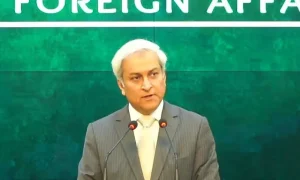
Foreign Office spokesperson Tahir Hussain Andrabi said Pakistan presented its position in a “comprehensive and evidence-based manner,” urging Kabul to act decisively against groups carrying out cross-border attacks.
“The Pakistan delegation handed over justified and logical demands aimed solely at ending cross-border terrorism,” Andrabi said. “The mediators are now discussing our proposals with the Afghan delegation point by point.”
Afghan representatives, however, described Islamabad’s demands as “unrealistic and aggressive,” claiming their own proposals were “logical and easily achievable.” One Kabul-based source said the Taliban negotiators conveyed that “it is up to Pakistan’s own calculations to deal with the situation.”
Tense Atmosphere
A source present at Istanbul’s Conrad Hotel, where the dialogue took place, described the atmosphere late Friday evening as “not positive.”
Information Minister Ata Tarar said the deadlock was “deeply regrettable” but blamed Kabul for failing to meet its commitments.
“The onus lies on Afghanistan to fulfill its international and bilateral pledges regarding the control of terrorism — in which so far they have failed,” Tarar said.
“Pakistan shall continue to exercise all necessary options to safeguard its people and sovereignty.”
Foreign Office officials echoed the warning, saying Islamabad would respond “in any eventuality” to protect its civilians and security forces from attacks emanating from Afghan territory.
Backdrop of Border Clashes
The Istanbul talks came after a series of deadly border clashes in October that left several soldiers and civilians dead on both sides, plunging relations to their lowest point since the Taliban’s takeover of Kabul in 2021.
Hostilities flared on October 11 when militants launched an attack from Afghanistan into Pakistan, following Taliban allegations of Pakistani airstrikes — a claim Islamabad has neither confirmed nor denied.
In response, Pakistan targeted Gul Bahadur group camps in Afghanistan. A ceasefire was reached on October 15 after multiple skirmishes, paving the way for dialogue facilitated by Turkiye and Qatar.
Previous Rounds: Fragile Progress
The first round of talks in Doha resulted in a fragile ceasefire, while the second, also held in Doha, produced only a general understanding to develop a monitoring mechanism and continue dialogue.
Despite mediation efforts, the second round failed to yield concrete progress. Information Minister Ata Tarar announced on October 29 that the talks “failed to bring about any workable solution,” though mediators later salvaged the process with a joint statement on October 31, committing both sides to meet again in Istanbul.
Ceasefire Under Strain
The third round opened on Thursday amid renewed border tensions — including a cross-border exchange of fire at the Chaman–Spin Boldak crossing that killed two people, including a woman, on the Pakistani side.
While the ceasefire technically remains in place, officials from both sides acknowledge that the truce is fragile and dependent on further progress in the now-stalled diplomatic process.
As of Friday night, no joint statement had been issued by Turkiye or Qatar, and both delegations had departed Istanbul without scheduling a new date for resuming talks.
“Unless the Afghan side shows tangible progress on controlling cross-border attacks, it will be difficult to move forward,” a Pakistani official said.
The deadlock underscores the widening trust deficit between Islamabad and Kabul — a gap that mediators warn could further destabilize an already volatile border region.