Sindh Performance Report: CM Murad Ali Shah Highlights Key Achievements
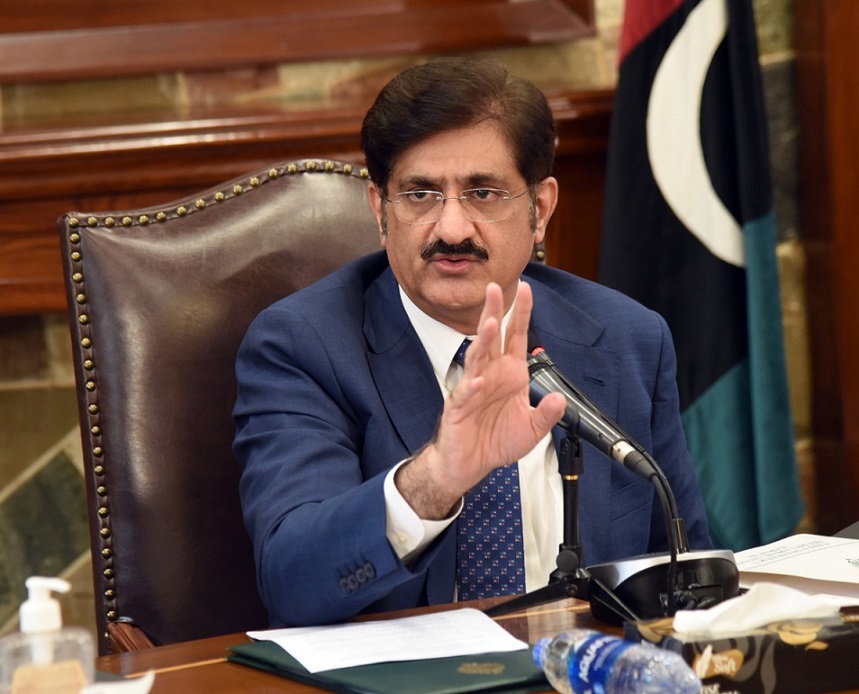
Sindh CM Murad Ali Shah presents the annual performance report, highlighting healthcare, education, infrastructure, and digital transformation initiatives from March 2024 to March 2025.
Sindh Chief Minister Syed Murad Ali Shah has unveiled the Sindh Performance Report, providing a comprehensive overview of key developments across multiple sectors from March 2024 to March 2025. The 171-page report, presented at CM House Karachi, highlights major advancements in healthcare, education, infrastructure, IT, water management, and governance reforms, underscoring the provincial government’s commitment to progress and digital transformation.
Healthcare Advancements and Medical Innovations
Sindh’s healthcare sector has undergone significant transformation, marked by enhanced medical facilities, improved patient access, and the introduction of cutting-edge technologies. The National Institute of Cardiovascular Diseases (NICVD) Karachi treated over 1.4 million patients, performed more than 5,000 cardiac interventions and surgeries, and expanded its free pediatric cardiac services to Quetta, reinforcing its role as a regional healthcare leader.
The Sindh Institute of Cardiovascular Diseases (SICVD) continued to improve its services by establishing a cardiac emergency center in Baldia Town and launching a stroke treatment program in Sukkur. The institute also reported treating over 119,000 patients from outside Sindh, demonstrating its growing influence in the healthcare sector.
The Institute of Medical Science, Gambat, known for its specialization in organ transplantation, successfully performed over 200 liver transplants and 100 kidney transplants. The facility also introduced robotic catheterization laboratories and advanced joint replacement procedures, enhancing the quality of surgical care available to patients.
Hospitals across Sindh have expanded their capacities and upgraded their facilities. The Jinnah Postgraduate Medical Center (JPMC) launched a second robotic surgical system, while Liaquat University of Medical & Health Sciences (LUMHS) is in the process of acquiring similar state-of-the-art surgical technology. District Hospital Thatta has been upgraded to a Teaching Hospital, and a 100-bed hospital in PIB Colony, Karachi, is nearing operational status, reflecting the government’s commitment to expanding medical infrastructure.
The Indus Hospital Karachi is undergoing a major expansion, supported by a Rs. 5 billion grant, aimed at increasing bed capacity and improving patient care. The Sindh Institute of Urology & Transplantation (SIUT) introduced Pakistan’s first robotic surgery center and PET CT unit, advancing cancer diagnostics and treatment across the province.
The Shaheed Mohtarma Benazir Bhutto Institute of Trauma treated 70,000 patients and established specialized units for thoracic surgery, interventional radiology, and plastic surgery. Meanwhile, the Sindh Institute of Advanced Endoscopy and Gastroenterology introduced Radio Frequency Ablation (RFA) for liver tumor treatment, and the Sindh Institute of Child Health & Neonatology (SICHN) expanded its pediatric intensive care and neonatal facilities.
Strengthening Emergency and Rescue Services
Emergency response capabilities in Sindh have significantly improved through the expansion of ambulance services, the launch of new emergency response projects, and enhancements in trauma care. The Sindh Integrated Emergency Health Services increased the number of ambulances and emergency vehicles and introduced a hypertension management initiative to improve preventive healthcare services.
The Sindh Emergency Rescue Service 1122 has refurbished emergency rooms in district hospitals and established satellite emergency response stations on major highways, ensuring faster response times for accidents and medical crises.
The ChildLife Foundation has played a crucial role in transforming pediatric emergency care, establishing nine state-of-the-art pediatric emergency centers and 106 telemedicine units. These efforts have led to a sharp decline in infant mortality rates in Sindh, which now stands at 2.9%, compared to the national average of 5.4%.
According to global health reports, Sindh’s public pediatric emergency facilities now match or surpass private hospitals in quality. Sheikh Zayed Children’s Hospital Larkana and Civil Hospital Karachi achieved a 1.2% mortality rate, which is lower than the 1.4% recorded at Aga Khan Hospital and significantly better than the 6.3% average reported in 19 similar countries.
Development Goals and Future Vision
The Sindh Performance Report outlines a long-term vision for sustained progress in public welfare, infrastructure, and digital governance. CM Murad Ali Shah emphasized that continued investment in these sectors will ensure higher living standards, improved healthcare, and better educational opportunities for the people of Sindh.
With new projects in the pipeline, including further modernization of hospitals, enhanced emergency response systems, and increased digital integration in governance, the Sindh government aims to build a more efficient, transparent, and people-centric administration.