Nowshera Suicide Blast: JUI-S Leader Maulana Hamidul Haq Among Four Dead, 20 Injured
NOWSHERA: A Nowshera suicide blast at Darul Uloom Haqqania in Khyber Pakhtunkhwa’s Nowshera district claimed at least four lives, including Jamiat Ulema-e-Islam-Sami (JUI-S) leader Maulana Hamidul Haq Haqqani, and left 20 others injured, the provincial government confirmed.
Suicide Blast Targets Worshippers During Friday Prayers
The Nowshera suicide blast occurred inside the main prayer hall of the madressah as worshippers gathered for Friday prayers, KP Inspector General Zulfiqar Hameed told DailyOutcome.pk. “It was a suicide attack, and at least three policemen were among those injured,” Hameed stated.
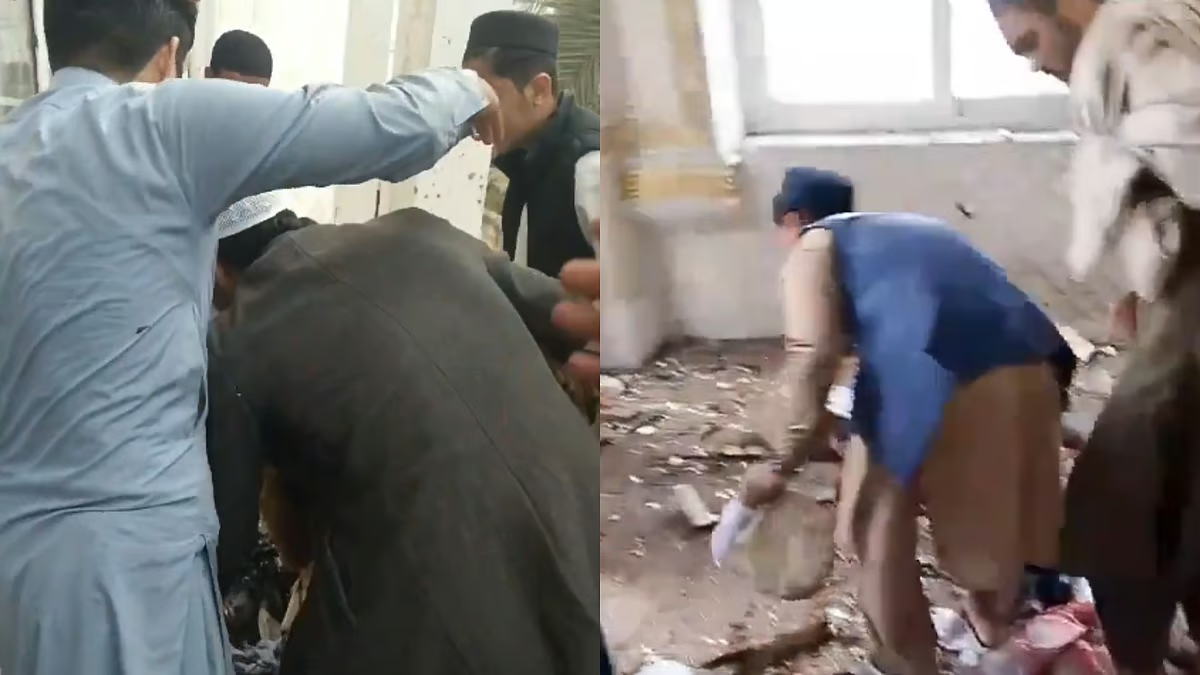
Eyewitnesses described scenes of chaos and devastation as the explosion ripped through the prayer hall, shattering windows and leaving debris scattered across the room. Rescue teams rushed to the site, evacuating the wounded to nearby hospitals.
Following the attack, the Khyber Pakhtunkhwa (KP) government declared an emergency in all hospitals and health facilities in Peshawar, which is located 70 kilometers away from Nowshera. Officials have been directed to ensure the presence of medical staff and provide an adequate supply of medicines for the injured.
Maulana Hamidul Haq Haqqani’s Legacy
Maulana Hamidul Haq Haqqani, a prominent religious scholar, was the son of the late Maulana Samiul Haq, who was assassinated in 2018. He served as the vice chancellor of Darul Uloom Haqqania, one of Pakistan’s largest Islamic seminaries, and was the chairman of JUI-S.
Haqqani had also served as a member of the National Assembly from 2002 to 2007. In recent years, he played a key role in religious diplomacy, leading a delegation of Pakistani scholars to Afghanistan in 2023 for discussions with Taliban leaders. He had stated that the visit helped reduce tensions between Islamabad and Kabul.
His seminary, Darul Uloom Haqqania, founded in 1947, has produced many graduates who later joined the Taliban, including senior leaders such as Amir Khan Muttaqi, Abdul Latif Mansoor, and Mullah Khairullah Khairkhwa. The seminary has faced controversy in the past, particularly after allegations that some of its students were involved in the assassination of former Prime Minister Benazir Bhutto. However, the madressah has denied any links to extremist activities.
Political and Government Reactions
The suicide attack was met with strong condemnation from national leaders.
KP Chief Minister Ali Amin Gandapur directed authorities to submit an immediate report on the incident and instructed officials to ensure the best medical treatment for the wounded. He condemned the attack, stating, “Targeting innocent people in a place of worship is an inhumane act. The perpetrators of this tragic incident will be brought to justice.”
President Asif Ali Zardari expressed his deep sorrow over the loss of lives and strongly condemned the act of targeting worshippers. “Terrorists are enemies of the country, nation, and humanity,” he stated.
Prime Minister Shehbaz Sharif also denounced the attack and prayed for the recovery of Maulana Haqqani and other injured individuals. In a statement, he reaffirmed the government’s commitment to eradicating terrorism. “Such cowardly acts cannot weaken our resolve to eliminate terrorism from Pakistan.”
Interior Minister Mohsin Naqvi echoed similar sentiments, extending condolences to the bereaved families and ensuring that the federal government would fully support KP authorities in the investigation.
KP Governor Faisal Karim Kundi blamed hostile elements for orchestrating the attack, calling it a “conspiracy to destabilize the region.” He criticized the provincial government’s security policies, stating, “It is important to get rid of rulers who harbor terrorists in the province.”
No Claim of Responsibility Yet
As of now, no group has claimed responsibility for the attack. However, security officials suspect Islamic State – Khorasan (IS-K), which has previously targeted religious scholars and places of worship in Pakistan.
Afghanistan’s Taliban government also condemned the attack. Afghan Interior Ministry spokesman Abdul Mateen Qani blamed the Islamic State (IS) group, stating, “We strongly condemn the attack. We recognize them as enemies of religion and have tried our best to eliminate them.”
Security and Intelligence Response
Following the incident, security forces cordoned off the area and initiated a forensic investigation to determine the identity of the suicide bomber and any potential links to terrorist networks. Counter-Terrorism Department (CTD) officials are analyzing CCTV footage from the madressah and surrounding areas.
Security has been tightened across mosques, religious seminaries, and public gatherings in KP and other provinces to prevent further attacks. Law enforcement agencies have been placed on high alert.
Ongoing Challenges in Pakistan’s Fight Against Terrorism
Pakistan has witnessed a resurgence in terrorist activities in recent months, particularly in KP and Balochistan. Suicide bombings, targeted killings, and ambushes against security personnel have escalated, despite the government’s efforts to curb militancy.
The attack on Darul Uloom Haqqania is the latest in a series of deadly terrorist incidents targeting religious and political figures.
According to security analysts, the resurgence of violence is linked to the deteriorating security situation in Afghanistan, where IS-K has expanded its operations since the Taliban’s takeover in 2021. Intelligence agencies have repeatedly warned that terrorist groups are attempting to regroup and launch attacks inside Pakistan.
Funeral and Aftermath
The funeral prayers for Maulana Hamidul Haq Haqqani and other victims will be held later today in Nowshera, with top religious leaders, political figures, and thousands of followers expected to attend.
Authorities have assured that a thorough investigation will be conducted, and the perpetrators will be brought to justice.