Green Pakistan or Green Deception?
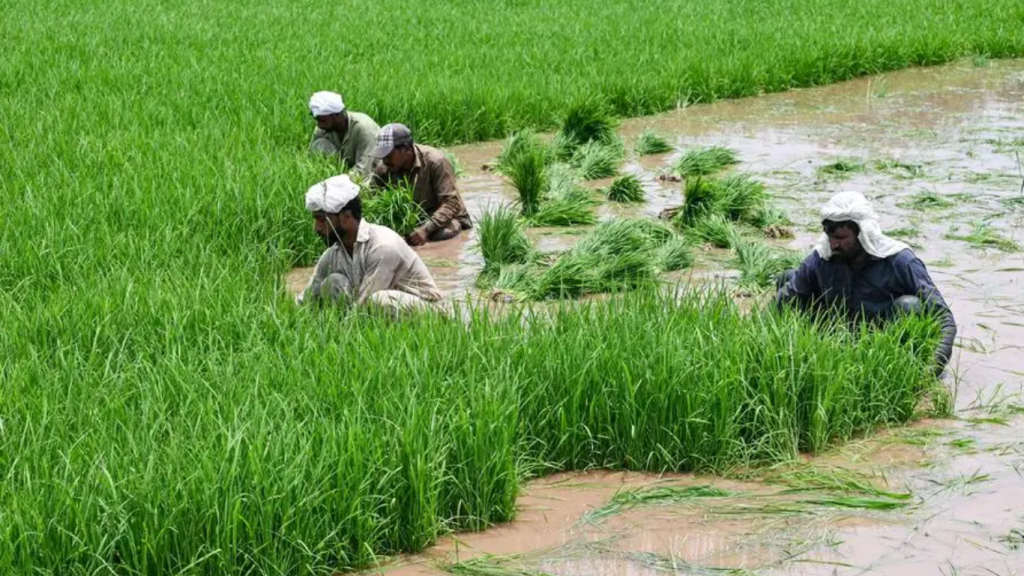
Sindh receives roughly 32% of Pakistan’s Indus water (48.76 MAF per the 1991 Accord), yet current shortfalls are very high — about a 45–50% overall deficit for crops.
The Battle for Sindh’s Water and Land
Opinion by SHAHZAD ALI
The Green Pakistan Initiative (GPI) is a national program launched under the Special Investment Facilitation Council to bring modern farming to millions of acres of idle land. Its aim is to use new irrigation and management techniques to boost crop yields, food security, and farmer incomes. In Sindh, however, experts warn that water shortages and land use conflicts must be addressed.
Sindh receives roughly 32% of Pakistan’s Indus water (48.76 MAF per the 1991 Accord), yet current shortfalls are very high — about a 45–50% overall deficit for crops. This critical shortage threatens 5–6 million acres of cultivated land. With over 77% of Sindh’s farmland irrigated, key cash crops — such as the roughly 650,000 acres of sugarcane and extensive mango orchards — are already under severe stress. Some canal branches report up to 80% water deficit. Farmers fear that allocating more canal water to new projects will deepen this crisis.
Facts and Figures
Water Deficit
Sindh currently faces an overall irrigation water shortage of around 50%, but specific canal systems are experiencing even more severe deficits. For example, Guddu Barrage is receiving only about 10.3% of its required flow, meaning it faces an 89.7% shortfall. Sukkur Barrage, which feeds most of Sindh’s canal network, is operating at just 66.3% of its needed supply — a 33.7% deficit. These shortfalls are critical during planting and early growth periods.
Irrigated Land
Over three-quarters of Sindh’s farmland is irrigated, making water the lifeline of its rural economy.
Crop Areas
Sugarcane is sown on about 650,000 acres in Sindh. At least 1.3 million acres grow cotton, a crop planted early and requiring additional watering. Mango orchards, spread across hundreds of thousands of acres, line canal commands — but now face severe water cuts. Any further shortage, especially before the monsoon, could devastate yields.
GPI Land Allocation
Sindh’s caretaker government has identified about 52,713 acres of barren or degraded land for GPI corporate farms. This includes 28,000 acres in Khairpur, 10,000 acres in Tharparkar, and 9,305 acres in Dadu. (Dadu district includes the Gorakh Hills and the adjacent Kachho desert areas.) Smaller parcels ranging from 1,000 to 3,408 acres were also marked in Thatta, Sujawal, and Badin.
Separately, Sindh’s cabinet approved consideration of a lease for 14,008 acres in Umerkot district (dehs Horingo and Chhor) to a corporate company. Umerkot lies in the Tharparkar region, which is already facing acute drought.
Local Resistance
Critics note that 52,713 acres in Sindh have already been handed over to “Green Pakistan Initiative” companies, displacing local farmers. In Umerkot alone, some 14,000 additional acres have been allotted to the same company. Civil society groups warn that these projects risk turning into “corporate farming” land grabs, further marginalizing smallholders.
Sindh’s Water Crisis
Sindh is the lowest riparian province — it uses only what flows downriver from Punjab. In practice, its agriculture is now starved for water. By late March 2025, Sindh reported a 50% water shortage for Rabi (winter) crops. (The previous winter deficit was about 45%, and flows have not recovered by the time of Kharif planting.)
For example, Sukkur Barrage — which feeds most of Sindh’s canals — was running at only about one-third of its normal supply. One branch of the Nara Canal system, West Jamrao, is receiving just 20% of its allocated water (an 80% shortfall). The result: crops are already suffering severe stress. Wheat grain filling and early-planted cotton lack moisture. Mango and banana growers face fruit drop. Sugarcane (on approximately 650,000 acres) risks wilting without adequate irrigation.
Farmers fear that any new canal or diversion projects under GPI would worsen Sindh’s desperate water shortage and harm existing farms.
GPI Land Allocations in Sindh: A Deeper Look
Under GPI, the Sindh government has earmarked large tracts of land for development by special-purpose companies. Official sources confirm that about 52,713 acres of state land have been identified for the pilot Green Corporate Initiative scheme. The breakdown is as follows: Khairpur (28,000 acres), Tharparkar (10,000 acres), Dadu (9,305 acres), with smaller plots in Thatta, Sujawal, and Badin.
Notably, Dadu district encompasses the drought-prone Kachho desert and Gorakh Hills — remote upland areas already short of water. Additionally, a Sindh cabinet committee recently deferred a decision on leasing 14,008 acres in Umerkot to the army-backed company.
These allocations have raised alarms. Umerkot and Tharparkar lie in Sindh’s most arid southeast, with chronic water scarcity. Dadu’s Gorakh–Kachho area in west-central Sindh also has limited irrigation potential. Converting these lands into massive farms — primarily for corporate producers — threatens to divert water from local communities.
At a recent conference, activists noted that 52,713 acres in Sindh were already “handed over” to GPI companies, with 14,000 more acres in Umerkot under consideration. They warn this mirrors corporate land grabs, where huge estates are being carved out under the guise of “modern agriculture,” while small farmers risk eviction. The lack of local consultation and unclear water planning have fueled protests. Even proposed new canals (including those built in Punjab) are opposed by Sindh leaders, who view them as threats to their dwindling share of Indus water.
Impact on Sindh’s Agriculture
The combined effect of GPI projects and the ongoing water crisis could be dramatic. Sindh’s irrigated area exceeds 5 million hectares (over 12 million acres). If the promised land development goes ahead without securing water resources, much of this land could be underutilized or even abandoned.
Already, Sindh’s farming output is suffering. Mango orchards in Umerkot and Mirpurkhas (at the fruit formation stage in spring) may drop crops due to under-watering. Sugarcane in southern Sindh is similarly stressed. Government panels have noted that without urgent reform, Sindh could lose productive farmland and worsen its food insecurity.
In a nutshell, while the GPI aims to boost agriculture, its implementation in Sindh raises hard questions. Will new farms get enough water? Who will benefit from these land allocations? The Sindh public is watching closely: the province’s farmers insist that any development must respect water rights and share benefits — not just turn Sindh’s dry lands into private estates.