Pakistan says Afghanistan strikes conducted to protect citizens, Thwart imminent terror threats
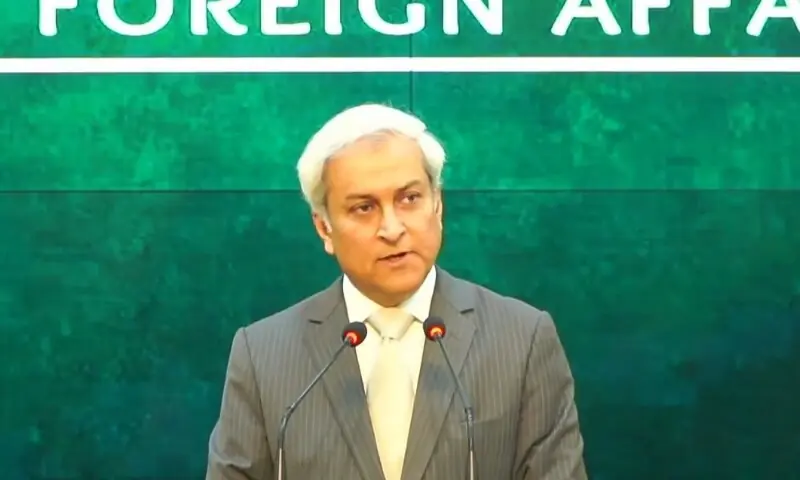
FO spokesperson Tahir Andrabi
ISLAMABAD: Pakistan’s Foreign Office (FO) on Thursday said recent air strikes carried out inside Afghanistan were aimed at ensuring the safety of Pakistani citizens and preventing imminent terrorist attacks.
Speaking during his weekly press briefing, FO spokesperson Tahir Andrabi said the intelligence-based operation targeted seven identified terrorist camps and hideouts along the Pakistan-Afghanistan border region.
“Let me begin by reiterating that the intelligence-based selective targeting of these seven terrorist camps and their hideouts was primarily to ensure the safety and security of Pakistani citizens and to prevent imminent terrorist attacks against Pakistan,” he said. He added that the threats were particularly directed at law enforcement personnel and civilians residing near border areas.
Over the weekend, Pakistan conducted air strikes in Afghanistan’s eastern provinces of Nangarhar Province and Paktika Province, reportedly killing more than 80 militants. Officials described the action as the most extensive military engagement between the two countries since border clashes in October last year.
Responding to questions regarding possible civilian casualties and the scale of the operation, Andrabi stressed that the strikes were “proportional, based on careful planning with necessary due diligence,” and were directed solely against identified terrorist targets.
“We exercised utmost caution to prevent any harm to civilians,” he said, declining to provide additional details on the locations or number of militants killed, citing a February 21 statement issued by the Ministry of Information.
The spokesperson referred to recent statements by the United Nations Security Council condemning terrorist attacks against Pakistan, including the February 6 attack on an imambargah in Islamabad. He noted that the UNSC had repeatedly called for holding perpetrators, organisers, sponsors and abettors of terrorism accountable and urged states to cooperate with Pakistan.
Pakistan’s actions, he said, must be viewed within that context. While reaffirming Islamabad’s commitment to regional peace, Andrabi urged the Afghan Taliban government to fulfil its obligations in preventing militant groups from operating from Afghan soil.
“At the same time, Pakistan will take all necessary measures in the exercise of the right to self-defence against terrorist attacks emanating from Afghanistan,” he added.
Addressing India’s reaction, the spokesperson rejected a statement issued by India’s Ministry of External Affairs condemning the strikes. He alleged that India continues to support militant outfits operating against Pakistan, including the Balochistan Liberation Army.
He claimed Pakistan possessed “concrete evidence” of India’s involvement in sponsoring and abetting terrorism, adding that recent statements from New Delhi reinforced Islamabad’s position.
“These statements provide additional, circumstantial evidence of India’s complicity in promoting terrorism in Pakistan,” he said, reiterating that Pakistan had conveyed to international stakeholders its resolve to respond “swiftly and strongly” in self-defence.
The FO spokesperson said he was unaware of any structured dialogue currently underway between Pakistan and Afghanistan. When asked about a possible diplomatic role by Qatar, particularly following Prime Minister Shehbaz Sharif’s recent visit to Doha and meeting with Emir Sheikh Tamim bin Hamad Al Thani, Andrabi said discussions had taken place in a broader regional context.
“To that extent, of course, we would welcome Qatar’s role in settling all these issues, including Afghanistan,” he said.