
CJP Calls Full Court Meeting to Deliberate on 27th Constitutional Amendment
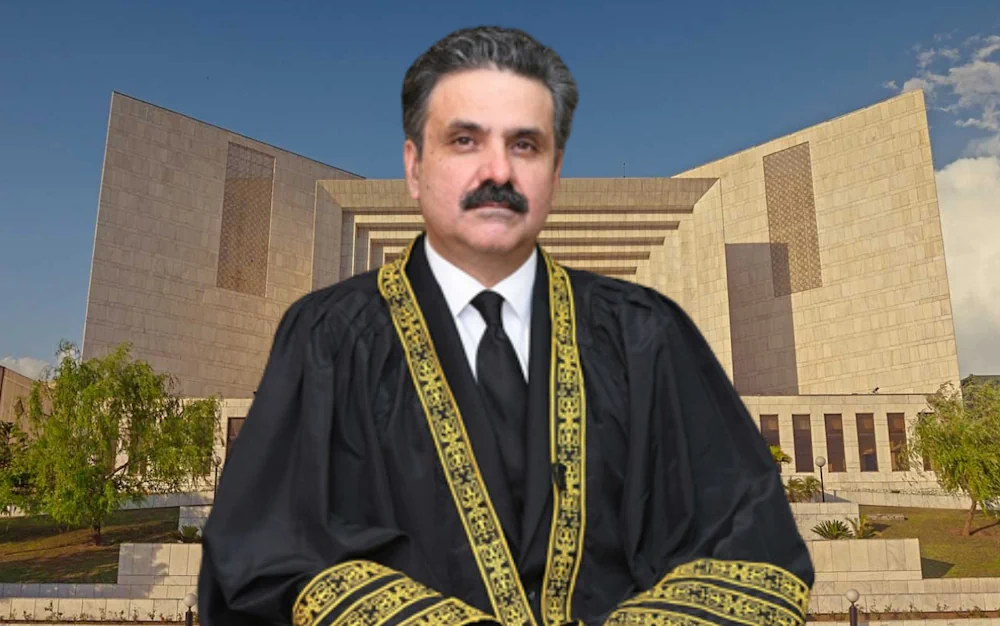
CJP Calls Full Court Meeting to Deliberate on 27th Constitutional Amendment
ISLAMABAD — Chief Justice of Pakistan (CJP) Yahya Afridi has convened a full court meeting of the Supreme Court on Friday to discuss the recently enacted 27th Constitutional Amendment, following a series of letters from senior judges expressing deep concern over its implications for judicial independence.
The decision came after Justice Salahuddin Panhwar became the third Supreme Court judge to request such a meeting, joining earlier calls made by Justices Syed Mansoor Ali Shah and Athar Minallah. Both senior judges, however, resigned from their positions on Thursday evening in protest against the amendment.
According to court sources, the meeting — to be chaired by the CJP — will be held at the Supreme Court building prior to Friday prayers.
In a two-page letter addressed to the CJP, Justice Panhwar urged a clause-by-clause examination of the 27th Amendment in light of Articles 175, 175A, 189, 190, 191 and 209 of the Constitution, which collectively govern the judiciary’s structure, powers, and independence.
Justice Panhwar wrote that his appeal was “not in protest but in duty — the duty that binds every judge who has sworn to preserve, protect and defend the Constitution.” He warned that silence in such times “is not caution but abdication,” adding that the amendment may “unsettle the careful balance the framers intended.”
The judge cautioned that the amendment could affect the “security of tenure, the composition of benches, the appointment and removal of judges, and even the financial and administrative autonomy of courts.” He proposed that each clause of the amendment be tested by a single question: “Does it strengthen the independence of the judiciary, or diminish it?”
He further suggested seeking a technical brief from the Law and Justice Commission and, if needed, engaging the National Judicial Policy Making Committee. Justice Panhwar also urged consultation with the Pakistan Bar Council and provincial bar councils, stressing that “the bar and the bench are twin guardians of justice.”
Emphasising constitutional responsibility, Justice Panhwar wrote that “for Parliament’s power to amend is plenary, but it is not without limit. The Constitution is not clay to be moulded at will; it is a covenant between the state and the citizen.”
In a passionate appeal, he reminded fellow judges that “history will not remember the ease of our days but the courage of decisions,” and warned that “if the judiciary is not free — free from fear, influence, and control — then the rule of law becomes but a hollow phrase.”
Meanwhile, lawyer Asad Rahim Khan filed a petition in the Supreme Court seeking a declaration that Parliament cannot curtail the Supreme Court’s jurisdiction under Entry 55 of the Federal Legislative List. The petition urged the apex court to ensure judicial independence and grant any appropriate relief necessary to protect constitutional boundaries.
Earlier in the day, President Asif Ali Zardari signed the 27th Constitutional Amendment Bill into law, following advice from Prime Minister Shehbaz Sharif. The enactment formally establishes the Federal Constitutional Court (FCC), a new judicial body aimed at handling constitutional questions separately from the Supreme Court.
According to official sources, President Zardari will administer the oath to the first Chief Justice of the FCC at the Presidency tomorrow, further setting into motion one of the most significant structural changes to Pakistan’s judiciary in decades.