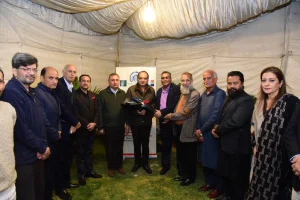
Benazir Hari Card: Sindh’s Landmark Initiative to Empower Farmers
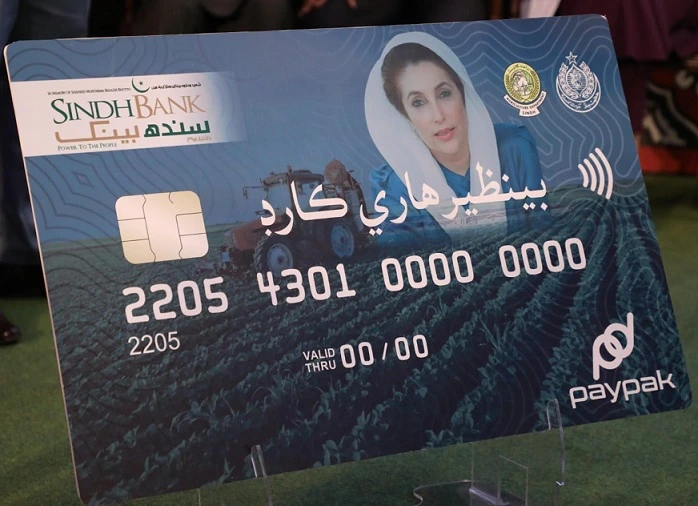
Benazir Hari Card: Sindh’s Landmark Initiative to Empower Farmers
By a Commentator
The Sindh Government has launched the Benazir Hari Card, a landmark initiative designed to uplift small farmers and safeguard Pakistan’s agricultural future. This program specifically supports cultivators owning between 1 to 25 acres of land by providing them with direct financial assistance for purchasing fertilizers such as DAP and Urea.
At a time when food insecurity and economic pressures loom large, the Hari Card is more than just a policy—it is a model of farmer-centered governance that ensures vulnerable communities are not left behind.
The vision behind this initiative is rooted in reducing Pakistan’s dependency on wheat imports, preventing food crises, and creating a fairer system of agricultural support that strengthens rural households. It reflects the Pakistan Peoples Party’s historic commitment—shaped by Shaheed Zulfiqar Ali Bhutto and Shaheed Mohtarma Benazir Bhutto—to empower the working class and place the nation’s economic strength in the hands of its people.
The Benazir Hari Card is being hailed not only as an economic intervention but also as a social revolution. It restores dignity to peasants, offers them independence, and reinforces Sindh’s role in securing food sovereignty for Pakistan. The scheme also calls upon the Federal Government to play its part by ensuring fair support prices, providing tax relief on agricultural inputs, and enforcing transparent procurement systems that protect rather than exploit small farmers.
Agriculture is Pakistan’s backbone, employing millions and producing essential crops like wheat, rice, and sugarcane. Yet, for decades, subsidies and resources have disproportionately favored large landowners, leaving small farmers neglected. The Hari Card addresses this imbalance by channeling resources directly into the hands of those who cultivate the soil with their own labor. By reducing input costs and ensuring timely access to fertilizers, the program promises higher yields and improved incomes. Experts estimate that such interventions could increase wheat production by 15–20% annually, strengthening national food reserves and easing pressure on imports.
The timing is crucial. Global disruptions in food supply chains and rising fertilizer prices threaten to worsen Pakistan’s agricultural challenges. The Hari Card is both a social safety net and a macroeconomic safeguard, insulating the country from shocks that could undermine food security and foreign exchange reserves.
Beyond the numbers, this initiative carries deep symbolic weight. It represents social justice for Sindh’s rural communities, who have long endured structural neglect and exploitation by middlemen. By providing cash transfers dedicated to fertilizers, the government has broken a cycle of dependency and restored farmers’ sense of worth. Importantly, the scheme includes women farmers—often overlooked—ensuring gender equity in agriculture and strengthening household food security.
In honoring the legacy of Shaheed Mohtarma Benazir Bhutto, whose name the card bears, this program embodies her politics of compassion, equality, and grassroots empowerment. It demonstrates that governance is not merely about promises but about delivering real, tangible support to those who sustain the nation’s food supply.
The Hari Card also places a moral responsibility on the Federal Government. If Islamabad fails to align with Sindh’s efforts through fair pricing, tax relief, and accessible procurement policies, the country risks further food shortages and costly imports. Sindh has taken the lead; it is now for the federation to match this resolve.
Ultimately, the Benazir Hari Card is more than an agricultural scheme—it is a declaration of intent. It signals that under Chairman Bilawal’s leadership, Sindh will not abandon its farmers. It affirms that strong, people-focused leadership can transform crisis into opportunity. And it lays the foundation for a food-secure, self-reliant Pakistan where the toil of small farmers is recognized, respected, and rewarded.
Through this initiative, the Sindh Government is proving that when policies are sincere and people-centered, the fields flourish, farmers thrive, and the dream of a stronger Pakistan comes within reach.