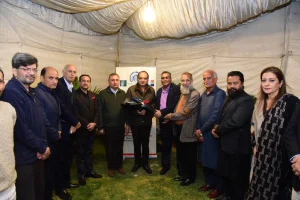
Maryam accuses PPP of politicising floods as Bilawal defends BISP for relief distribution
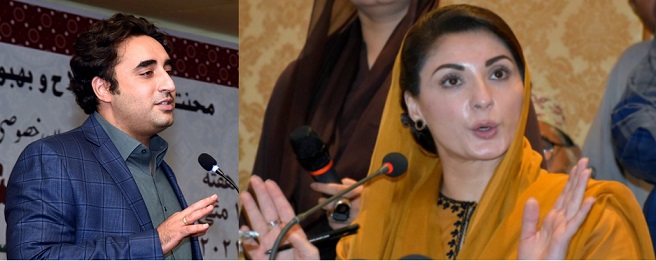
Maryam accuses PPP of politicising floods as Bilawal defends BISP for relief distribution
The political alliance between the Pakistan Peoples Party (PPP) and Pakistan Muslim League-Nawaz (PML-N) is once again under strain as accusations and counter-claims emerged over the method of flood relief distribution. On Thursday, PML-N leader and Punjab Chief Minister Maryam Nawaz accused the PPP of “politicising” floods, while PPP Chairman Bilawal Bhutto-Zardari strongly defended the Benazir Income Support Programme (BISP) as the “sole method” for ensuring transparent and effective assistance to victims of the devastating floods.
The dispute comes at a time when large parts of Punjab, Sindh, Khyber Pakhtunkhwa, and Gilgit-Baltistan remain badly affected by floods, raising urgent questions about food security, rehabilitation, and compensation for affected families.
Bilawal Bhutto insists on BISP for relief
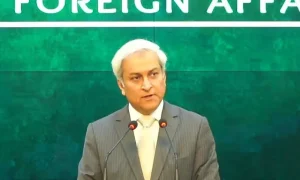
Addressing a press conference in Karachi, Bilawal Bhutto-Zardari emphasized that the agriculture sector, already under pressure, has been severely damaged by the recent floods. “Our national food security may also be at risk,” he warned. Bilawal urged the federal government to declare both a climate emergency and an agriculture emergency to address the unprecedented losses.
He praised Prime Minister Shehbaz Sharif for acting on his proposals but argued that the most effective way to channel immediate relief to flood victims was through BISP. “A natural calamity is not the responsibility of any one province; across the world, the federal government plays the leading role. It is also the responsibility of the federal government to deliver relief through BISP,” he said.
Highlighting past practices, Bilawal reminded the government that during the Covid-19 pandemic and earlier disasters, BISP had been used as the central tool for disbursing cash to vulnerable families. He added, “So, BISP is the sole method through which the federal government can provide immediate relief to affected people.”
The PPP chairman also called for additional measures, such as waiving power bills for farmers in flood-hit districts and supporting small landowners with fertiliser and the provincial Benazir Hari Card scheme. He stressed that timely government support could strengthen Pakistan’s food security and reduce the need for wheat imports.
Maryam Nawaz rejects BISP as sufficient
Later in the day, Punjab Chief Minister Maryam Nawaz Sharif responded sharply, accusing the PPP of exploiting the humanitarian crisis for political mileage. “The PPP is our ally and I respect them, but unfortunately, they have been politicising the floods in Punjab,” she said while addressing a ceremony in Dera Ghazi Khan.
Maryam particularly criticised reliance on the BISP model, calling it a “very simplistic solution.” She argued that the Rs10,000 cash handouts under BISP were grossly inadequate to meet the needs of families who had lost homes, livestock, and crops. “On the other hand, I will give them Rs1 million,” she announced, stressing her commitment to rebuilding destroyed houses and compensating farmers for their agricultural losses.
She added that while BISP might provide temporary relief, the scale of devastation required a comprehensive rehabilitation strategy. “What will people who have lost everything do with just Rs10,000?” she asked.
International aid debate resurfaces
Another layer of disagreement between the two coalition partners is the question of international assistance. Bilawal criticised the federal government for failing to launch a global appeal immediately after the floods. “When the floods began, the government should have acted at once. By engaging the international community and even seeking a review of IMF restrictions, Pakistan could have mobilised more resources for flood victims,” he said.
Maryam Nawaz, however, defended the government’s decision not to request global aid. “The thing is, I am Nawaz Sharif’s daughter, and I will not beg for aid,” she asserted. She argued that Pakistan must learn to rely on its own resources rather than repeatedly turning to the international community. She further pointed out that provinces already receive billions through the NFC Award, questioning how effectively those funds were being utilised.
Political fault lines widen
The clash between Maryam Nawaz and Bilawal Bhutto-Zardari reflects deeper tensions within the ruling coalition. While both PPP and PML-N recognise the scale of the disaster, their starkly different positions on the role of BISP, provincial initiatives, and international aid expose growing policy disagreements.
As Punjab and Sindh remain at the centre of the flooding crisis, the political tussle risks overshadowing urgent relief work. Analysts suggest that unless the federal and provincial governments coordinate effectively, affected families could face prolonged delays in receiving meaningful assistance.
For now, Maryam Nawaz accuses PPP of politicising floods, while Bilawal Bhutto insists that BISP remains the most transparent and efficient mechanism to reach millions of affected Pakistanis. With both leaders holding firm, the debate over flood relief distribution highlights the fragility of coalition politics at a time when Pakistan is grappling with one of the most severe natural disasters in its history.