
300,000 More People Evacuated in Eastern Pakistan After Indian Flood Alert
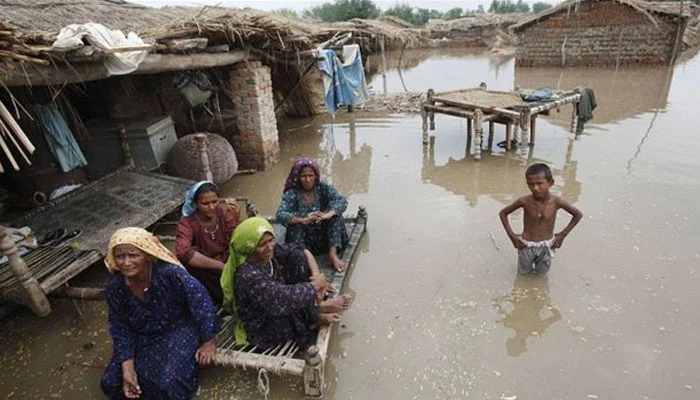
Nearly 300,000 people have been evacuated in Pakistan’s Punjab after a new Indian flood alert
LAHORE: Nearly 300,000 people have been evacuated in eastern Pakistan’s Punjab province over the past 48 hours after a fresh Indian flood alert, officials confirmed on Wednesday. The large-scale evacuation raises the total number of displaced individuals since last month to more than 1.3 million, making this one of the most severe flood-related crises in recent years.
Floodwaters have submerged dozens of villages in Punjab’s Muzaffargarh district, after earlier inundating low-lying areas in Narowal and Sialkot near the Indian border. Authorities are working round the clock to divert overflowing rivers onto farmland in an effort to shield major cities from devastation. Officials described the effort as one of the largest rescue and relief operations in Punjab’s history.
Thousands of rescuers, supported by boats and heavy machinery, are carrying out evacuation and relief efforts. The military has also been deployed to transport people and livestock from flooded villages, said Arfan Ali Kathia, Director General of Punjab’s Provincial Disaster Management Authority (PDMA). “We are facing an unprecedented challenge, but every effort is being made to ensure the safety of our people,” he said.
According to Kathia, a new flood alert from India was conveyed through diplomatic channels early Wednesday — the second such warning in just 24 hours, triggered by heavy rainfall and water discharges from Indian dams. He confirmed that the Ravi, Chenab and Sutlej rivers are currently at high flood levels, threatening more settlements downstream.
Rescuers have also turned to technology, using drones to identify families stranded on rooftops. Kathia said more than 3.3 million people across 33,000 villages in Punjab have been affected so far. Damage assessments are ongoing, and the Punjab government has pledged compensation for families who have lost homes, livestock, or crops.
The flooding crisis has also extended into neighboring India, where landslides and flash floods have killed at least 29 people in Punjab state. Relief camps have been established in Pakistan, with around 40,000 evacuees currently sheltered, though many survivors expressed frustration over inadequate facilities and delayed food distribution.
In Sher Shah village near Muzaffargarh, farmer Noor Mohammad, 54, said he had sent his family to stay with relatives due to the lack of official aid. Another resident, Malik Ramzan, chose to remain near his inundated home instead of entering a camp, citing poor conditions. “Food isn’t delivered on time, and we are treated like beggars,” he complained.
Punjab Chief Minister Maryam Nawaz Sharif visited Muzaffargarh on Wednesday to meet displaced families in relief camps. Her visit came just hours after the latest Indian flood alert, underscoring the urgency of the situation. She assured families that the government would provide continued support and expedite rehabilitation efforts.
Last week’s flooding devastated parts of Kasur, Bahawalpur and Narowal, where the deluge submerged the historic shrine of Guru Nanak near the Indian border. Authorities have since reopened the shrine for pilgrims after cleaning and restoration.
Pakistan began mass evacuations last month when India released excess water from dams into low-lying border regions. Officials warn that the ongoing floods are the worst since 2022, when climate-driven monsoon rains killed nearly 1,700 people across the country.