Sindh Faces 50% Water Shortage, Threatening Kharif Crops
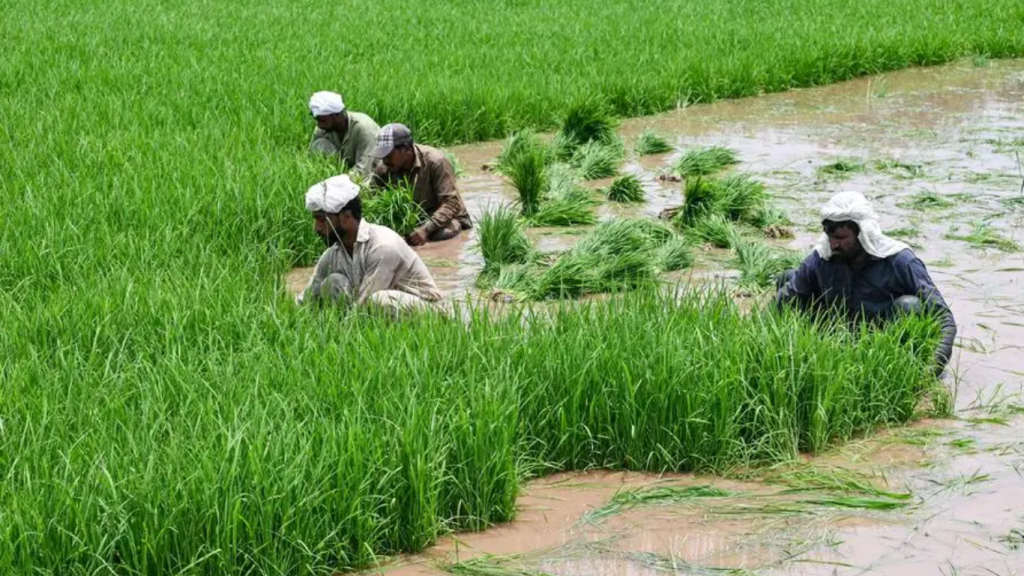
Sindh receives roughly 32% of Pakistan’s Indus water (48.76 MAF per the 1991 Accord), yet current shortfalls are very high — about a 45–50% overall deficit for crops.
HYDERABAD: Sindh is grappling with a severe water shortage as Tarbela and Mangla Dams have reached dead levels, creating a critical situation for Kharif crops just before the formal start of the season. With the province already experiencing a 45% shortage during the Rabi season, the situation has worsened to 50%, significantly impacting agriculture.
On Monday, Guddu Barrage recorded a 10.3% shortage, while Sukkur Barrage reported a 66.3% deficit, making irrigation increasingly difficult. Mangla Dam hit its dead level of 1,050 feet on March 15, while Tarbela Dam was only one foot above its dead level of 1,402 feet as of March 17. According to Indus River System Authority (IRSA) Director of Operations Khalid Idrees Rana, this situation is a usual phenomenon at the end of the Rabi season, but its impact on the upcoming Kharif season is alarming.
Impact on Irrigation and Sindh’s Agriculture
The Sukkur Barrage, which supplies water to most of Sindh through seven major canals, is struggling to maintain adequate flow. Meanwhile, Guddu and Sukkur barrages also provide water to Balochistan, worsening the scarcity.
Currently, Guddu Barrage is only drawing water for Ghotki Feeder, its left bank channel, while the right bank canal, Desert Pat Feeder, is supplying 1,900 cusecs to Balochistan. Additionally, Balochistan was receiving 500 cusecs through Taunsa Barrage until March 17. Sukkur Barrage has been supplying 600 cusecs to Balochistan, while Kotri Barrage recorded a flow of 5,199 cusecs, including 1,200 cusecs allocated for Karachi and 200 cusecs for Hyderabad and Latifabad for drinking purposes.
Mango Orchards and Key Crops at Risk
The wheat crop, currently at the grain formation stage, is expected to suffer yield losses due to water scarcity. Additionally, mango orchards, primarily located along the left bank of Sukkur Barrage extending to Umerkot, require immediate irrigation. The Rohri and Nara canals at Sukkur Barrage were discharging 3,600 cusecs each on Monday—far below their allocated 8,300 and 11,500 cusecs, respectively.
In Mirpurkhas, the West Jamrao branch of the Nara Canal System is experiencing an 80% water shortage, leaving mango growers without sufficient irrigation during the critical fruit formation stage.
Besides mangoes, other key crops like banana, sugarcane, and vegetables (okra, cauliflower, tomatoes) are also expected to suffer. Sindh Abadgar Board President Mahmood Nawaz Shah warned that fruit shedding will occur if mango orchards do not receive adequate water, leading to major economic losses for farmers.
Kharif Crops Face an Uncertain Future
The lower Sindh region, known for its early Kharif crop sowing, is already witnessing setbacks in cotton cultivation. Farmers typically plant cotton in February and March, requiring three cycles of irrigation at short intervals. However, the acute water shortage in March and April is expected to disrupt cotton growth, lowering per-acre productivity.
With 650,000 acres of land under sugarcane cultivation, growers fear significant reductions in yield. If early sown Kharif crops do not receive water, germination will be affected, leading to further economic damage.
Urgent Measures Needed to Avert Agricultural Crisis
The IRSA Advisory Committee had scheduled a meeting on April 1 to assess water flow projections for the Kharif season, but due to Eid holidays, it is likely to be postponed until the first week of April. In the meantime, farmers and agricultural experts are urging the government to take emergency measures to manage water distribution, ensuring critical crops receive irrigation before it is too late.
If the current crisis continues, Sindh could face severe agricultural losses, jeopardizing food security and economic stability in the region.